Your Oven Is a Liar and Your Uneven Cake Layers Are the Proof
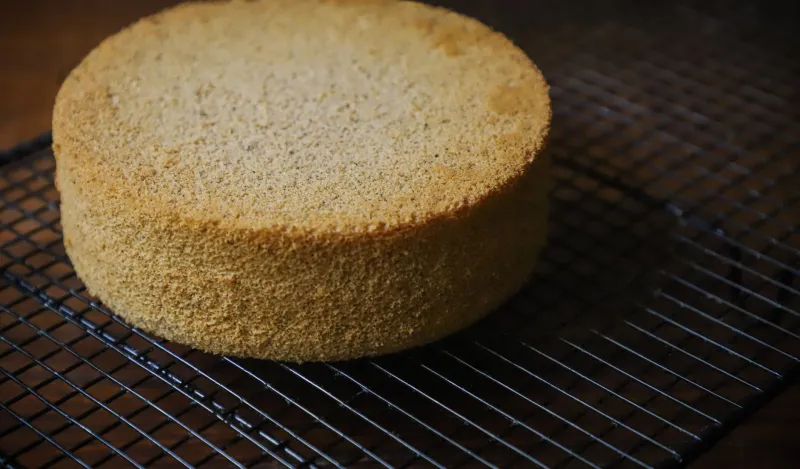
You followed the recipe. You measured everything twice. You even sifted the flour like some kind of patient, responsible adult. And yet — one of your cake layers is noticeably thicker than the other, one has a dome the size of a small hill, and stacking them together looks less like a birthday cake and more like a geological formation.
So you do what any reasonable person does: you blame the recipe. Maybe the ratios were off. Maybe the leavening was wrong. Maybe the internet lied to you again.
Here's the thing. The recipe is probably fine. Your oven, on the other hand, has been quietly committing crimes against your baked goods since the day you moved in, and it's time to have that conversation.
Your Oven Temperature Is Almost Certainly Wrong
This is the part nobody wants to hear: the number on your oven dial is basically a suggestion. Most residential ovens — especially the ones that came with your apartment or were purchased at a big box store for under a grand — run anywhere from 25 to 50 degrees off from what they claim. Sometimes hotter. Sometimes cooler. Sometimes both, depending on the time of day and whether Mercury is in retrograde.
The fix here is embarrassingly simple. Buy an oven thermometer. Not the cheap $6 one that bends after three uses — spend a whopping $12 to $15 on a decent dial-style thermometer, hang it from your center rack, and actually read it before you bake anything. You will be shocked. Possibly offended. Definitely humbled.
Once you know what your oven is actually doing, you can compensate. If it runs hot, drop your set temperature. If it runs cool, bump it up. Revolutionary stuff, we know.
Hot Spots Are Real and They're Ruining Your Life
Even if your oven's average temperature is accurate, that doesn't mean the heat is distributed evenly. Most home ovens have hot spots — areas where the heat concentrates more intensely than others. This is why one side of your sheet pan cookies always browns faster, and why one cake layer comes out perfectly baked while the other one is still doing its thing ten minutes later.
Hot spots typically live near the back of the oven, close to the heating element, or in corners. The front and center tend to be cooler. Your oven doesn't care about your feelings or your dinner party timeline.
The fix: rotate your pans. Halfway through baking, spin your cake pans 180 degrees. Yes, this means opening the oven door and briefly disturbing the heat environment, which some baking purists will tell you is catastrophic. Those people are wrong. A quick rotation is worth it. Just don't slam the door on the way back in, because that actually can cause sinking.
If you want to map your hot spots before committing to a big bake, try the bread test. Lay slices of white bread across your oven rack and toast them at 350°F for a few minutes. The pattern of browning will show you exactly where the heat is concentrated. It's like a thermal map of your oven's personality flaws.
Rack Position Matters More Than You Think
Where you put your cake pans in the oven isn't a trivial decision. The center rack is the sweet spot for most layer cakes — it keeps the pans equidistant from both the top and bottom heating elements, which means more even, consistent baking. Baking too close to the bottom element? You'll get a darker, faster-cooking bottom with a raw center. Too close to the top? The surface sets and browns before the interior has time to catch up.
If you're baking two layers simultaneously, here's where things get tricky. Stacking two pans on the same rack is a mistake — they'll block each other's airflow and bake unevenly. Splitting them between two racks sounds logical, but now one pan is closer to the bottom element and one is closer to the top. Neither one is living its best life.
The actual move: bake your layers one at a time on the center rack. Yes, it takes longer. Yes, it's worth it. If you absolutely must bake both at once, offset them on two racks and rotate both pans — swapping their rack positions and spinning them 180 degrees — at the halfway point.
Cheap Pans Are Also Suspects
While we're pointing fingers, let's talk about your pans. Thin, flimsy cake pans conduct heat unevenly, heat up too fast, and cool down too fast. The result is uneven baking, over-browned edges, and layers that dome in the middle because the edges set before the center has time to rise properly.
You don't need to drop $50 on a single pan. But you do need pans with some actual weight to them — light-colored aluminum pans in the $15 to $25 range are the sweet spot. Dark pans absorb more heat and can cause over-browning. Glass pans are a whole different situation and not ideal for layer cakes.
Also: make sure your pans are actually the same size. This sounds absurd, but two "9-inch" pans from different brands can have meaningful differences in diameter and depth. Measure them. You might be surprised.
The Wet Towel Trick That Actually Works
If you've done everything right — calibrated your oven, rotated your pans, used proper equipment — and you're still getting domed layers, there's one more tool in the arsenal: baking strips. These are fabric strips you soak in water, wrap around the outside of your cake pan, and bake with. The wet fabric keeps the edges of the pan cooler, which slows down the edge-setting process and lets the whole cake rise more evenly. No dome. Flat layers. Stacking becomes a joy instead of a structural engineering challenge.
You can buy official baking strips online for about $10, or you can cut strips from an old towel, soak them, and pin them around your pan. Both work. The DIY version just requires slightly more effort and a safety pin.
Stop Blaming the Recipe
Look, recipes aren't perfect. Sometimes they're genuinely broken. But uneven layers are almost never a recipe problem — they're an environment problem. Your oven is doing its own thing, your pans are conducting heat inconsistently, and your rack position is working against you.
The good news is that none of this requires new equipment, a bigger kitchen, or a culinary degree. It requires an oven thermometer, a willingness to rotate your pans, and the humbling acceptance that your oven has been the problem this whole time.
Your recipe was innocent. Pour one out for it. Then go bake something flat and beautiful.