The $400 Gluten Destroyer Sitting on Your Counter: What Your Stand Mixer Is Doing to Your Bread
Let's paint a picture. You saved up, you splurged, you unboxed that stand mixer like it was a newborn. You positioned it on the counter with the reverence of a religious artifact. And now, every loaf of bread you bake comes out with the texture of a foam pool noodle — dense, rubbery, and about as pleasant to eat as a gym mat.
Nobody told you the machine might be the problem. Of course they didn't. The entire baking industrial complex wants you to believe that more equipment equals better results. It doesn't. Sometimes it just means more expensive failures.
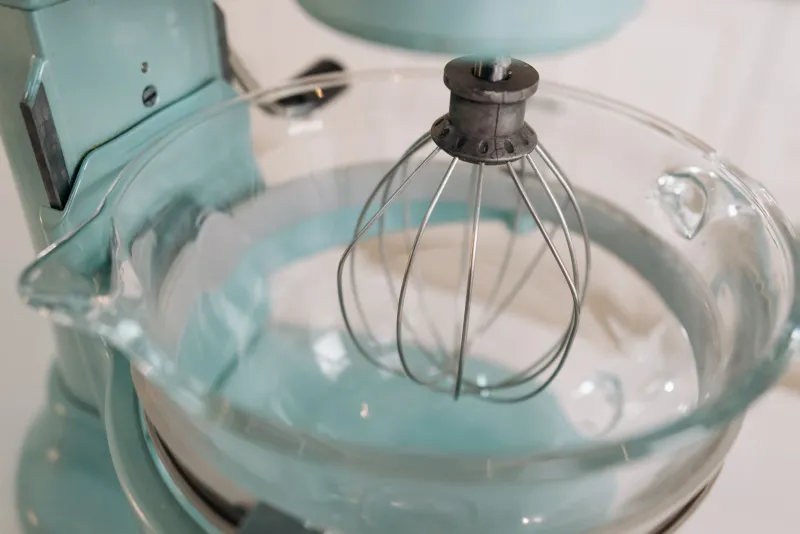
Let's talk about what your stand mixer is actually doing to your bread dough, why it matters, and when you need to put the dough hook away and get your hands dirty.
Gluten Development Isn't a Race, But Your Mixer Thinks It Is
Here's the deal with gluten: it's a protein network that forms when flour and water get together and start bonding. That network is what gives bread its structure — the thing that traps gas bubbles from your yeast and creates that beautiful, chewy crumb you're chasing.
The keyword there is network. Networks take time and finesse to build properly. What they don't need is an industrial motor running at speed 4 for twelve straight minutes like it's trying to meet a quota.
When you mix bread dough by hand, you naturally pause. You fold, you press, you give the dough a chance to rest. Those micro-breaks matter more than anyone tells you. They allow gluten strands to align and relax, building a strong but extensible structure.
A stand mixer doesn't pause. It hammers that dough continuously, over-developing the gluten past the point of usefulness. Instead of elastic and extensible, you get tight, stubborn, exhausted dough. Bake that and you get bread with a crumb like a rubber band factory.
The Friction Problem Nobody Talks About
Here's something that will make you feel slightly betrayed: stand mixers generate heat through friction. That dough hook churning against your dough, lap after lap, warms the whole thing up. And warm dough ferments faster, which sounds fine until you realize your gluten development and your yeast activity are now completely out of sync.
Professional bakers obsess over dough temperature. There's a reason bakeries use refrigerated water or even ice in their mixing process — they're compensating for the heat generated by their commercial mixers. Your home stand mixer has the same problem at a smaller scale, and your recipe almost certainly wasn't written to account for it.
The result? Dough that's already half-fermented before it even hits the proofing stage. The yeast has burned through its fuel too fast, structure is compromised, and your oven spring — that glorious puff of expansion when the loaf hits heat — is weak and sad.
Signs Your Mixer Went Too Far
You can usually tell when the damage is done, even before the bake. Here's what overworked bread dough looks like:
- It's weirdly stiff. Properly developed dough should be soft, slightly tacky, and willing to stretch without tearing. Over-mixed dough feels tight and resistant, like it's angry at you.
- It tears instead of stretches. Do the windowpane test — stretch a small piece thin enough to see light through it. If it tears immediately, the gluten is shot.
- It's warm to the touch. Finished dough should be around 75–78°F. If it's pushing 85°F or hotter coming out of the mixer, you've already got a problem.
- It doesn't spring back slowly. Poke properly developed dough and it should ease back gradually. Over-mixed dough either snaps back immediately (too tight) or barely responds at all (structure is gone).
Any of these sound familiar? Yeah. Your mixer did that.
When to Ditch the Machine Entirely
Not every bread recipe belongs in a stand mixer. Here's a quick guide to when you should step away from the appliance entirely:
High-hydration doughs like ciabatta, focaccia, and many sourdoughs are better handled through stretch-and-fold techniques. These doughs are too wet for a dough hook to do anything useful anyway — the hook just slaps it around. Instead, do a series of folds in the bowl every 30 minutes during bulk fermentation. You'll build better structure with zero risk of over-mixing.
No-knead recipes should be left the hell alone. The entire point is time doing the work, not mechanical force. If you're throwing a no-knead dough into a stand mixer, you've missed the assignment completely.
Enriched doughs like brioche and cinnamon roll dough are where the stand mixer actually earns its keep — but even these need to be mixed in stages and watched carefully. Add butter slowly. Stop and check. This isn't a set-it-and-forget-it situation.
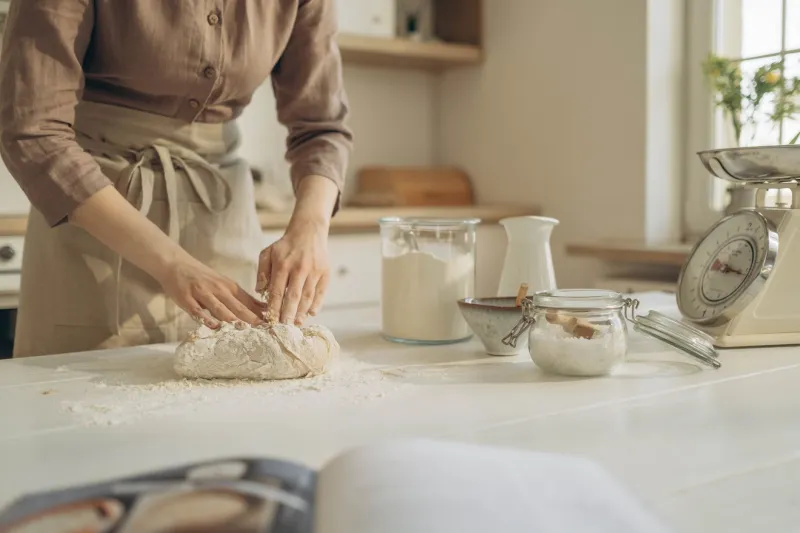
Simple sandwich loaves and lean doughs are honestly fine to mix by hand in 8–10 minutes. You'll feel the dough change under your palms. That tactile feedback is information no machine can give you.
How to Use Your Mixer Without Wrecking Everything
If you're not ready to go full manual — fair enough, it's a free country — here's how to use your stand mixer without turning your bread into a chew toy:
-
Cut your mixing time in half. Whatever the recipe says, start checking the dough earlier. Most home recipes are written conservatively and assume you might undermix. With a stand mixer, you can hit the right development point faster than you think.
-
Use lower speeds. Speed 2 is your bread speed. Speed 4 is for frosting and people who hate their dough.
-
Let the dough rest mid-mix. Stop the machine after 3–4 minutes, cover the bowl with a towel, and let the dough sit for 5 minutes. This is called autolyse (sort of), and it gives the gluten a chance to align naturally before you continue working it.
-
Monitor dough temperature. Get an instant-read thermometer and check your dough when you think it's done. If it's above 80°F, you've pushed it too long. Use colder water next time.
-
Do the windowpane test, not the clock. Time is a guideline, not a finish line. The dough tells you when it's ready. Trust the dough.
The Uncomfortable Takeaway
Your stand mixer is a fantastic tool for a lot of things. Cakes, cookies, meringues, whipped cream, frosting — it shines. But bread is a different animal, and the machine that makes your buttercream silky can make your sandwich loaf feel like it was baked inside a tire.
The bakers who make the best bread — the ones with the open crumb and the crackling crust and the loaves people actually talk about — they're mostly working by hand. Or they're using their machines carefully, briefly, and with full awareness of the risks.
Expensive equipment is only as good as the judgment behind it. Your hands have been with you your whole life and they've never once over-developed a gluten network. Maybe give them a shot.