Put Down the KitchenAid: Your $500 Stand Mixer Is Quietly Destroying Your Cookies
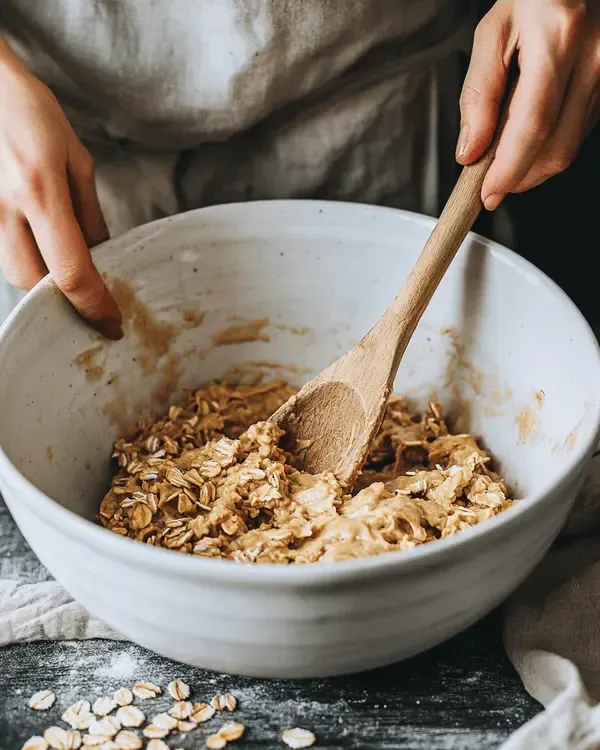
Photo: hands mixing cookie dough wooden spoon bowl, via www.desserthaven.net
Let's start with an uncomfortable truth: that gleaming stand mixer sitting on your counter — the one that cost more than your first car payment — might be the single biggest reason your chocolate chip cookies taste like regret.
Yeah. We went there.
Nobody wants to hear that the $500 appliance they put on their wedding registry is actively working against them. But here at Topless Baker, we don't do comfortable lies. We do damn good food. And sometimes, damn good food requires you to put down the fancy gear and pick up a wooden spoon like it's 1987.
The Over-Mixing Problem Nobody Talks About
Here's the science, stripped bare: cookie dough is not bread dough. It doesn't want to be worked. When you cream butter and sugar in a stand mixer on medium-high for five minutes — because some recipe told you to — you're whipping air into the fat. That sounds great in theory. In practice, it means your cookies spread too thin, develop a cakey, airy crumb instead of that dense, chewy center, and lose the structural integrity that makes a truly great cookie worth eating over the sink at midnight.
Gluten is the other villain here. Flour contains gluten proteins that, when agitated, link up and create structure. Great for bread. Terrible for cookies. A stand mixer spinning at speed develops gluten faster and more aggressively than your hand ever could. The result? Cookies that are tougher, chewier in the wrong way, and weirdly uniform — like they were printed, not baked.
Your grandma's method — softened butter mashed with a fork, sugar stirred in by hand, flour folded until just combined — kept gluten development minimal. She wasn't being old-fashioned. She was being correct.
We Actually Tested This (So You Don't Have To)
We ran three batches of a standard chocolate chip cookie using the same recipe, same ingredients, same oven temperature. The only variable was mixing method.
Batch 1 — Stand mixer, 4 minutes of creaming: Flat, crispy, almost lacy. Not bad if you like a thin cookie, but zero chew. The chips sank to the bottom. The crowd was not impressed.
Batch 2 — Stand mixer, 90 seconds of creaming: Better. Noticeably thicker. Still a little more spread than ideal, but we're getting somewhere.
Batch 3 — Hand mixed, wooden spoon, room-temperature butter: Thick. Domed. Chewy in the center, crispy at the edge. The chips stayed suspended in the dough like they were supposed to. Three people ate two cookies each without saying a word. That's the test.
The difference wasn't subtle. It was the difference between a cookie you eat because it's there and a cookie you hide from your roommate.
When the Stand Mixer Actually Wins
We're not here to tell you to throw your KitchenAid into the trash. That would be insane. For meringues, Swiss buttercream, chiffon cakes, and bread doughs, it's an absolute powerhouse. It earns its counter space every single time.
But for drop cookies — chocolate chip, oatmeal raisin, snickerdoodles, peanut butter — hand mixing isn't a compromise. It's the correct technique. The same goes for shortbread, where you actively want minimal gluten development to keep that crumble-in-your-mouth texture. A stand mixer will turn your shortbread into a sad, tough disc. A cold butter-and-hands approach? Perfection.
How to Hand Mix Like You Mean It
If you've been using a stand mixer for everything since you got it, here's your quick re-entry into the low-tech lane:
- Use real room-temperature butter. Not melted, not cold. It should dent when you press it but not collapse. This takes about an hour on the counter, not 15 seconds in the microwave.
- Cream butter and sugar with a wooden spoon or rubber spatula for 2–3 minutes. You want it combined and slightly fluffy, not whipped into oblivion.
- Add your eggs one at a time, stirring until just incorporated. Don't go wild.
- Fold in flour with the spatula until you can just no longer see dry streaks. Seriously. Stop there. The dough will look slightly underdone. That's correct.
- Chill the dough. At least 30 minutes. An hour is better. Overnight is best. This relaxes any gluten that did develop and concentrates flavor. It's not optional if you want a good cookie.
The Takeaway
Expensive equipment is a tool, not a guarantee. The best bakers in the world know when to use the machine and when to use their hands. Knowing the difference is what separates someone who bakes from someone who actually knows how to bake.
Your stand mixer is great. Your grandma's instincts were better. Use both wisely, and your cookies will be the kind people ask you to bring to every party for the rest of your life.
That, or just keep over-mixing and wondering why nobody takes seconds. Your call.