The Croissant Layer Illusion: How Lamination Goes Wrong Before You Even Touch the Oven
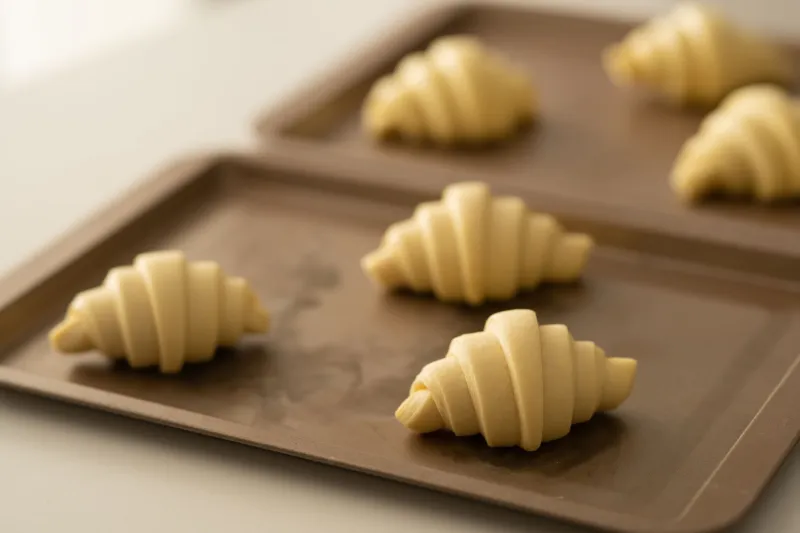
Somewhere between your third hour of folding dough and your first bite of something that tastes like a buttered regret pancake, you start to wonder if croissants are just a lie the French invented to make the rest of us feel bad. They're not. But they are deeply unforgiving, and the reason your lamination keeps collapsing has almost nothing to do with what you think it does.
Here's the uncomfortable truth: most croissant failures happen during the lamination process itself — not in the oven, not during shaping, and definitely not because you used the wrong brand of flour. The oven just reveals the crime scene. The actual sabotage? That happened hours earlier, quietly, while you thought everything was going fine.
What Lamination Actually Means (And Why Most People Get It Wrong)
Lamination is the process of folding cold butter into dough repeatedly to create hundreds of distinct, alternating layers. When those layers hit oven heat, the water in the butter turns to steam, puffs the dough apart, and gives you that shatteringly flaky, honeycomb interior that makes a real croissant worth the effort.
The key word there is distinct. If your butter and dough merge into one greasy, homogenous mass — which is exactly what happens when temperatures go sideways — you don't get layers. You get a dense, slightly oily roll that's technically edible but spiritually devastating.
The whole system depends on butter and dough staying separate until heat forces them to interact on your terms. The moment that separation breaks down, lamination is over. You're just rolling dough at that point.
The Butter Temperature Trap
Every croissant recipe on the internet tells you to use cold butter. What most of them fail to explain is that there's a very specific window of cold that actually works — and that both ends of the spectrum will wreck you.
Butter that's too cold is brittle. When you roll it into the dough, it shatters instead of bending. Those shards puncture the dough layers, merge unevenly, and create gaps where you needed clean, continuous sheets. You'll see this when your croissants bake up with weird hollow pockets in the wrong places and a lumpy, uneven exterior.
Butter that's even slightly too warm is worse. Warm butter smears into the dough instead of sitting on top of it. The layers fuse. The whole point of lamination evaporates. Your croissants bake up dense and greasy because the steam has nowhere to go — there are no real layers to push apart.
The target for your butter block is somewhere around 60°F — pliable enough to bend without cracking, firm enough that it doesn't squish. If you press a finger into it and it leaves a clean indent without the butter sticking to you, you're in the zone. If it cracks, warm it up for thirty seconds. If it smears, get it back in the fridge. This is not negotiable.
Uneven Rolling Pressure: The Invisible Layer Killer
This one nobody talks about, and it should be the first thing on every croissant tutorial. Uneven rolling pressure is responsible for a massive percentage of lamination failures, and it's almost impossible to spot while it's happening.
When you press harder on one side of the dough than the other — which almost everyone does, because almost no one applies perfectly even pressure across a rolling pin — you create a gradient. One side of your dough slab is thinner than the other. When you fold, those uneven layers stack unevenly. The thinner areas get compressed. The butter distributes inconsistently. By the time you're done with your folds, you've got a dough block where half the layers are doing real work and the other half are basically decorative.
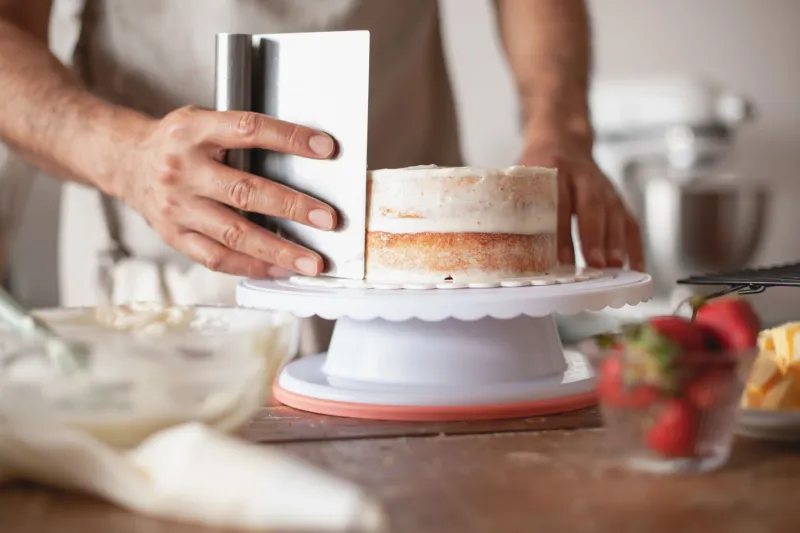
The fix is annoyingly simple: roll from the center outward, rotate your dough 180 degrees regularly, and pay attention to whether your slab is actually rectangular or quietly becoming a rhombus. A bench scraper can help you true up the edges. A ruler sounds obsessive until you see what it does for consistency.
Humidity Is Quietly Ruining Your Dough Before You Fold Anything
If you live somewhere humid — the Gulf Coast, the Pacific Northwest in winter, basically anywhere that isn't the high desert — lamination is a different game for you, and pretending otherwise is why your croissants keep disappointing you.
Humidity affects croissant dough in two ways. First, it changes how much liquid the flour absorbs, which means the hydration levels in most standard recipes are already wrong for your kitchen. A slightly wetter dough is more elastic and fights back harder when you roll it, which makes even lamination nearly impossible. You might need to reduce the liquid in your dough by a tablespoon or two just to get to the right starting texture.
Second, and more insidiously, ambient humidity softens your butter block between folds. You're working fast, you're trying to be precise, and the whole time your refrigerated butter is absorbing moisture from the air and warming up faster than it should. In a humid kitchen, your rest times between folds need to be longer, and your dough needs to go back into the fridge more frequently than the recipe says.
This is why croissant recipes developed in Paris don't always translate perfectly to Atlanta in August. The physics are the same; the environment is not.
The Resting Mistake That Collapses Everything
Resting your dough between folds isn't optional downtime — it's doing actual structural work. The gluten in the dough tightens up with every fold and roll. If you push through without resting, you're fighting an increasingly resistant dough that springs back and distorts your layers every time you try to roll it out. The butter shifts. The folds misalign. The layers that were supposed to be even become anything but.
Minimum thirty minutes in the refrigerator between each fold. An hour is better. Overnight between your final fold and shaping is not overkill — it's professional standard practice. The dough needs to relax. The butter needs to re-firm. You need to stop treating rest time like it's the boring part.
So What Actually Saves a Croissant?
Temperature control, consistent pressure, and patience — in that order, and none of them are optional. A probe thermometer for your butter, a deliberate rolling technique, and a willingness to put the dough back in the fridge the moment anything starts feeling soft or sticky will get you further than any specialty ingredient or expensive equipment.
The croissant doesn't care about your effort. It cares about your precision. Get the lamination right and the oven does the rest. Get it wrong, and no amount of egg wash is going to save you from a tray of sad, flat rolls that taste fine but look like something that gave up halfway through.
You've got this. Probably. Put the butter back in the fridge.