We Baked the Same Cake Twice and the Box Won: Here's the Part That Should Embarrass You
Let's get one thing straight before you close this tab in righteous fury: nobody here is telling you that baking from scratch is pointless. That's not the argument. The argument is that a lot of home bakers are spending three times the money and twice the effort to produce a cake that is, by measurable standards, worse than what came out of a $2.49 yellow box. And that deserves a conversation.
So we had one. With cake. And tasters who didn't know what they were eating.
The Setup (No Cheating, No Shortcuts)
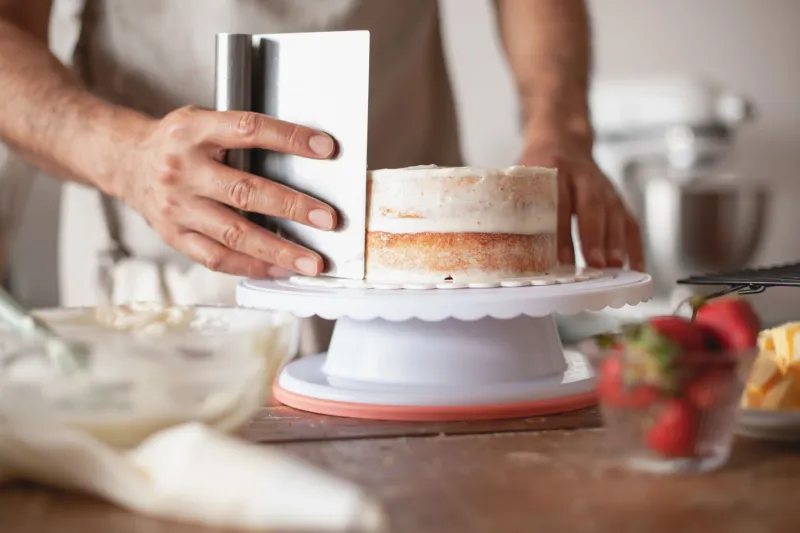
Here's how we ran it. Two vanilla layer cakes, baked in identical pans, at the same oven temperature, cooled on the same rack. One was made from scratch using cake flour, real butter, whole milk, pure vanilla extract, and fresh eggs — the kind of ingredient list that makes you feel like a serious person. The other was a Duncan Hines Classic Yellow box mix prepared exactly according to the package instructions. Both were frosted with the same homemade buttercream so frosting wasn't a variable.
We cut them into unmarked slices, handed them to ten people, and asked them to rate texture, moisture, flavor, and overall preference. No hints. No context. Just cake on a plate.
Seven out of ten people preferred the box mix cake.
Two of those people bake regularly and have opinions about vanilla bean paste.
Why the Box Cake Actually Works Better (Scientifically, Unfortunately)
Here's the thing food companies figured out decades ago and home bakers keep refusing to accept: box cake mixes are engineered. That's not a dirty word. The ratios of leavening agents, the type of flour used, the emulsifiers added to keep moisture locked in — all of that is the result of actual food science laboratories running the exact kind of testing that most home kitchens will never replicate.
When you bake from scratch, you're working with raw variables. Your butter might be slightly too cold. Your flour might be a little over-measured because you scooped instead of spooned. Your oven might run hot. Each of those things nudges the final result in unpredictable directions. The box mix is designed to absorb those small mistakes and still produce a consistent, moist, tender crumb every single time.
That consistency is what tasters responded to. The scratch cake was good — genuinely good — but it was slightly denser, a touch drier at the edges, and less uniform in crumb structure. The box cake was reliably soft all the way through. And when you're eating cake blind, reliable softness beats artisanal inconsistency.
Where Homemade Actually Wins (And It Does Win Here)
Before you throw your Kitchen Aid out a window in defeat, let's be clear about where scratch baking genuinely earns its reputation.
Flavor complexity is real. The scratch cake had a more nuanced, buttery flavor that several tasters noticed and appreciated — they just didn't prefer it overall. If flavor depth is your priority over texture, scratch baking delivers something the box can't fully replicate.
Specialty cakes are a different game entirely. A brown butter almond cake with cardamom? A fresh citrus chiffon? A dense, fudgy chocolate cake built around high-percentage cocoa? These aren't flavors a box mix is going to approximate. The moment you move away from vanilla or chocolate basics, scratch baking becomes the obvious choice because the box simply doesn't exist for those recipes.
Custom dietary needs matter. Gluten-free, dairy-free, reduced sugar — when you need to control every ingredient, the box mix isn't your friend. Scratch baking is where accommodation lives.
You actually know how to bake. If your measuring game is tight, your oven is calibrated, and you understand what properly creamed butter looks like, the gap between scratch and box narrows considerably. The box wins most often against sloppy scratch baking, not skilled scratch baking.
The Honest Breakdown: When to Use What
Stop thinking about this as a moral question and start thinking about it as a logistics question.
Use the box when: You're baking for a crowd and need consistency across multiple layers. You're short on time and the occasion doesn't demand showmanship. You're making a cake that's mostly a vehicle for something else — a filling, a frosting, a decorating project. You're teaching a kid to bake and want a reliable win. You're just really tired.
Bake from scratch when: The flavor of the cake itself is the main event. You're working with a recipe that doesn't exist in box form. You have the time, the ingredients, and the skill to execute it cleanly. You're bringing something to an occasion where the effort genuinely matters — a wedding shower, a birthday where the person will actually taste it, a bake sale where you want to be the one people remember.
The Part Nobody Wants to Say Out Loud
A significant portion of scratch baking snobbery isn't about the cake. It's about identity. It's about being the kind of person who bakes from scratch, which feels different from being the kind of person who opens a box. And that's fine — identity and ritual are legitimate reasons to do things. But don't confuse the performance with the product.
If you're baking from scratch because it brings you joy, because you love the process, because you find it meditative or creative or satisfying — that's a completely valid reason and nobody should take it from you. But if you're baking from scratch because you genuinely believe every result is automatically superior to a box cake, this taste test would like a word.
Seven out of ten people. Blind. The box.
What to Actually Do With This Information
Use both. Be strategic. Stop treating this like there's a right answer that applies to every situation, because there isn't. The best bakers aren't the ones who are ideologically committed to one method — they're the ones who know when each tool is appropriate and use it without apology.
Bake from scratch when it counts. Reach for the box when it makes sense. And maybe, just maybe, stop explaining your baking choices to people who are just trying to eat cake.
The cake doesn't care about your principles. It just wants to be good.