The Sad Cookie Autopsy: What's Actually Killing Your Chocolate Chip Game
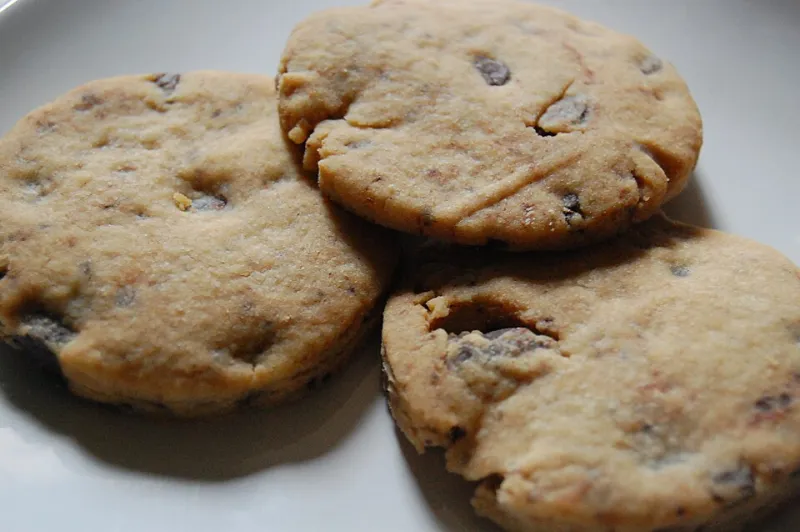
Photo: jayneandd, CC BY 2.0, via Wikimedia Commons
Let's be honest with each other for a second. You've made chocolate chip cookies. They came out fine. Not bad, exactly — but not good either. They were flat. Or cakey. Or weirdly pale. Or they had that vaguely chemical aftertaste that makes you wonder if you accidentally baked something from a chemistry lab.
You followed the recipe. You did everything right. And yet, here you are, eating a cookie that tastes like it was made in a break room by someone who clearly does not care about you.
Here's the thing: chocolate chip cookies are deceptively simple. That simplicity is a trap. Because when a recipe has six ingredients, every single one of those ingredients — and everything you do to them — actually matters. There's nowhere to hide.
Let's crack open your sad cookies and figure out what went wrong.
You Used Melted Butter (Or Cold Butter, You Absolute Chaos Agent)
Butter temperature is not a suggestion. It is the entire personality of your cookie.
Melted butter sounds logical — it mixes easier, right? Sure. And it'll also give you a flat, greasy, dense cookie that spreads into a puddle and has the texture of a regret. When butter is melted, you're skipping the creaming process that creates tiny air pockets in the fat, which is what gives a cookie its structure and lift.
On the flip side, butter that's cold from the fridge won't incorporate properly, and you'll end up with a lumpy dough that bakes unevenly.
What you want is softened butter — room temperature, but not so warm it's shiny or starting to melt. Press your finger into it. It should indent easily but still hold its shape. That's the sweet spot. Leave it on the counter for 30-45 minutes before you start baking. Yes, you have to plan ahead. Baking rewards patience and punishes impatience every single time.
You Skipped the Salt (Or Used Table Salt Like It's 1987)
If your cookies taste bland or weirdly sweet without any depth, this is almost certainly your problem. Salt doesn't just make things salty — it amplifies every other flavor in the cookie. The chocolate tastes more like chocolate. The vanilla actually shows up. The brown sugar gets a little more complex.
Skipping salt, or not using enough, leaves you with a one-note sugary blob that your brain registers as generic sweetness rather than a cookie.
Upgrade move: swap table salt in the dough for kosher salt, and then — this is important — finish your cookies with a pinch of flaky sea salt right before they go in the oven. Maldon is the classic. Fleur de sel works. Even generic store-brand flaky salt does the job. That little crunch of salt on top is what makes people take a second bite and say "okay what is in these."
Your Chocolate Chips Are Doing the Bare Minimum
Bag of generic semi-sweet chips from the baking aisle. We've all been there. And look, they'll work. But they won't make anyone emotional about your cookies.
The chips in most standard bags are formulated to hold their shape and not melt aggressively — which is fine for visual appeal but means less chocolate flavor and a waxy texture. Try chopping up a good quality chocolate bar instead. Ghirardelli, Guittard, or even a decent dark chocolate from Trader Joe's will give you irregular shards and puddles of chocolate that actually taste like something. The uneven pieces melt at different rates, giving you both crispy little flecks and big gooey pockets.
Also: use chocolate that's at least 60% cacao. Anything below that and you're basically just adding brown-flavored sweetness.
You Baked Them at the Wrong Temperature for the Wrong Amount of Time
Most cookie recipes call for 375°F. A lot of home ovens run hot or cool by 25-50 degrees, which means you might be baking at 325°F or 425°F without knowing it. Get an oven thermometer. They're like eight bucks at any grocery store and they will legitimately change your baking life.
Beyond temperature, timing is where people get squeamish. The cookies look underdone when you pull them out. They're pale. They seem almost raw in the center. And then you panic and put them back in for three more minutes and they come out overcooked and dry.
Here's the truth: pull them when the edges are set and lightly golden, but the centers still look soft and underdone. They'll continue to cook on the hot pan after you take them out of the oven. This is called carryover cooking, and it's the difference between a cookie that's chewy and gooey in the middle versus one that's uniformly dry all the way through.
You Didn't Let the Dough Rest
This one sounds like extra work, and it is, but it's worth it. Chilling your cookie dough for at least 30 minutes — or up to 72 hours in the fridge — does a few important things. It firms up the fat so your cookies spread less and stay thicker. It gives the flour time to hydrate fully. And it allows the sugars to develop deeper, more complex flavors through a process called hydrolysis.
In plain English: cold dough makes better cookies. They're chewier, more flavorful, and they have better texture. If you've ever had a cookie from a good bakery and wondered why it tasted so much richer than yours, the dough rest is probably part of the answer.
You don't need 72 hours. Even an hour in the fridge makes a noticeable difference.
You Used All-Purpose Flour and Nothing Else
All-purpose flour is fine. It's the Honda Civic of baking ingredients — reliable, gets the job done, nobody's going to be impressed. But swapping out a couple tablespoons for bread flour adds a little extra protein, which builds more gluten structure and gives you a chewier cookie with more bite.
Alternatively, if you want a more tender, almost shortbread-like cookie, a small amount of cake flour (swapping maybe 20% of the total) will soften things up nicely.
You don't have to do either of these things. But if you've been making the same recipe for years and wondering why it never quite hits, this is an easy variable to play with.
The Fix Is Boring, But It Works
Great chocolate chip cookies aren't about a secret ingredient or a revolutionary technique. They're about not cutting corners on the basics. Room temperature butter. Enough salt. Good chocolate. The right oven temperature. A little patience with the dough.
None of this requires a stand mixer, a kitchen scale (though you should really get one), or anything that costs more than a regular grocery run.
Your cookies can be the ones people ask you about. They can be the reason someone sends you a text that just says "recipe???" They can absolutely be better than a gas station.
You've got this.