Fudgy, Cakey, or Somewhere in Between: The Definitive Brownie Texture Smackdown
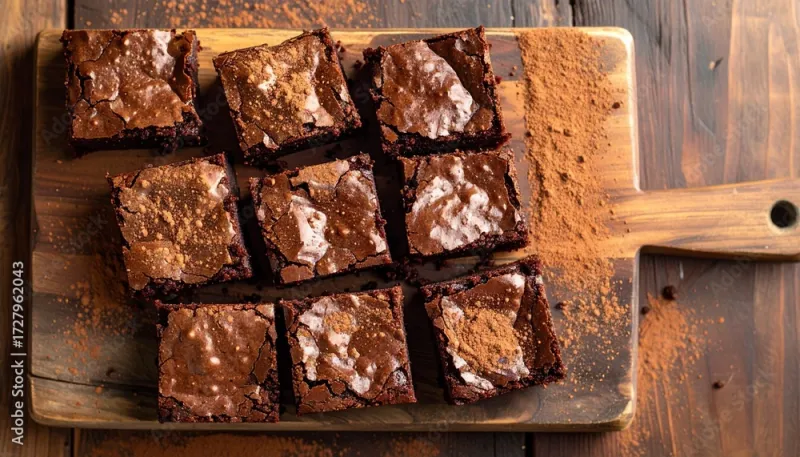
Photo: close up fudgy chocolate brownies cut into squares on wooden board, via as1.ftcdn.net
Let's get one thing out of the way: there is no universally correct brownie. That sentence will make half of you relieved and the other half furious, and honestly, that's exactly the energy this conversation deserves.
Brownies are the rare baked good where texture is the entire argument. Nobody debates whether a croissant should be flaky. Nobody fights about whether a baguette should have a crust. But brownies? Brownies will end friendships. They have ended friendships. Somewhere in America right now, two coworkers are having a passive-aggressive standoff over a potluck pan of brownies because one of them has opinions about crinkle tops.
So let's actually dig into what's happening inside that pan — the fat ratios, the egg counts, the flour percentages — and figure out why your brownies keep coming out like something you didn't ask for.
The Fudgy Brownie: Dense, Rich, Basically a Chocolate Brick (In the Best Way)
Fudgy brownies are the flex. When someone says they make "really good brownies," they almost always mean fudgy ones, because fudgy brownies feel intentional. They feel like you knew what you were doing.
Here's the science: fudgy brownies are fat-forward. You're looking at a high ratio of butter (or sometimes oil) to flour, fewer eggs than you'd think, and usually a lower baking temperature that lets the center set slowly without fully cooking through. The result is a brownie that looks almost underdone when you pull it from the oven — and that's not a bug, that's the whole point.
What makes them work:
- More fat, less flour. The ratio you're aiming for is roughly 1.5 to 2 parts fat to 1 part flour by weight. This keeps the crumb tight and moist.
- Melted chocolate over cocoa powder. Actual chocolate adds fat and body in a way cocoa alone can't replicate.
- Two eggs, not three. Every extra egg adds structure. Structure is the enemy of fudge.
- Pull them early. A toothpick should NOT come out clean. It should come out with moist crumbs clinging to it like they owe you money.
Where fudgy brownies go wrong: You overbake them. You waited for that toothpick to be clean because every other baked good in your life trained you to do that. The fudgy brownie is the exception. Treat it like a steak — pull it before you think it's done.
The Cakey Brownie: Light, Airy, and Unfairly Maligned
Cakey brownies get a bad reputation they don't entirely deserve. Yes, if you wanted cake, you could have made cake. But a well-executed cakey brownie has a lightness that fudgy brownies can't touch, and sometimes — sometimes — that's exactly what the moment calls for.
The cakey brownie is essentially a chocolate cake that got cut before it had a chance to grow up. It uses more flour, more eggs, and often a leavening agent like baking powder that fudgy brownie purists treat like a swear word.
What makes them work:
- More eggs, more structure. Three eggs minimum. Some recipes go to four. The extra egg whites trap air and create lift.
- Baking powder is not a sin. A quarter teaspoon is all it takes to get that springy, open crumb.
- Cocoa powder over melted chocolate. This isn't always the rule, but cocoa-based batters tend toward a lighter texture because they contribute less fat.
- Bake them fully. Unlike fudgy brownies, cakey ones want to be done. That toothpick should come out clean.
Where cakey brownies go wrong: They go dry. A cakey brownie that's been overbaked by even five minutes becomes a chocolate sponge you could use to clean your car. Watch your oven temperature and don't go past 350°F.
The Chewy Brownie: The Middle Ground That Nobody Talks About Enough
Here's the one that gets overlooked in the fudgy-versus-cakey war: the chewy brownie. Not dense. Not airy. Just... chewy. That slight resistance when you bite in, the way it pulls back just a little before giving way. This is the brownie that wins bake sales without anyone being able to explain why.
The secret to chewiness isn't one ingredient — it's a specific combination of factors that most recipes stumble into accidentally rather than on purpose.
What makes them work:
- Brown butter. Browning your butter before mixing it in adds a nutty, complex flavor and subtly changes the fat structure in a way that encourages chew.
- More sugar, especially brown sugar. Brown sugar is hygroscopic, meaning it holds onto moisture, which translates directly to a chewier bite. Use a 2:1 ratio of brown to white sugar.
- Bread flour, not all-purpose. This is the move almost nobody tells you about. Bread flour has more protein, which builds more gluten, which creates chew. Swap in just half your flour with bread flour and feel the difference.
- Let them cool completely. Chewy brownies need time to set. Cut them warm and they fall apart. Give them an hour and they firm into something genuinely excellent.
Where chewy brownies go wrong: They get confused and end up just being bad fudgy brownies. If you're going for chew, commit to the brown sugar and the bread flour. Half-measures give you half-results.
The Crinkle Top: Not a Texture, But We Need to Address It
People treat the shiny, crinkled top of a brownie like it's a texture category, but it's really just a surface phenomenon caused by dissolved sugar rising to the top during baking and forming a thin, crispy layer as it sets. You get it by beating your eggs and sugar vigorously before adding the fat — that's it. No mystery. No magic. Just physics doing its thing.
If your brownies don't have a crinkle top, you didn't beat the eggs and sugar long enough. Beat them for two full minutes and you'll see that glossy, crackled surface every single time.
So Which One Wins?
Fudgy, if we're being honest. But that's not really the point.
The point is that every brownie texture has a method behind it, and once you understand the levers — fat ratio, egg count, flour type, bake time — you can dial in exactly what you want. No more accidental cakey brownies when you wanted fudgy. No more dense bricks when you were going for chewy.
Bake with intention. Pull them at the right time. And for the love of everything, stop using a toothpick as your only metric.
Your brownies will thank you.