Greasy Donuts Are Not a Temperature Problem — They're a You Problem
Let's get one thing straight before you go blaming your fry oil or your sad little candy thermometer: greasy homemade donuts are almost never caused by the thing everyone says they're caused by. Temperature matters, sure. But it's not the smoking gun. The real culprits are hiding in plain sight — inside your dough, inside your clock, and inside that paper-towel-lined plate you think is doing God's work.
You've been lied to by the internet, and honestly, at this point, you should be used to that.
The Oil Temperature Obsession Is a Red Herring (Sort Of)
Here's the deal. Every donut recipe on the planet will tell you to fry at 375°F. Some will say 350°F. A few insufferable ones will say 365°F like that extra precision is what separates you from a Krispy Kreme franchise. And yes, frying temperature matters — drop below 340°F and you're essentially poaching your donuts in fat, which sounds disgusting because it is.
But here's what nobody tells you: most home frying setups can't hold a stable temperature to begin with. You drop four donuts into a pot of oil and that temperature craters by 20, sometimes 30 degrees in under a minute. Your thermometer — the $8 clip-on you bought on Amazon — is reading the temperature at one point in one part of the pot, not the actual cooking environment your donut is experiencing. So you're chasing a number that's already a lie.
Fixing your thermometer situation helps. Getting a decent instant-read or a proper deep-fry thermometer with a wide probe range is worth the $25. But that alone won't save you. Because the grease problem starts way before the oil.
Your Dough Is Too Wet and You Know It
This is the part where people get defensive. The dough felt fine! It came together! It wasn't sticky!
Okay, but was it actually right? Because dough hydration is the single biggest factor in how much oil a donut absorbs during frying. Wetter dough has more internal steam when it hits the oil — that steam pushes outward, and as it escapes, it creates pathways. When the donut cools, those pathways don't stay sealed with steam. They fill with oil. Congratulations, you've made a sponge.
Yeasted donut dough should be soft but not tacky. If it's sticking aggressively to your hands without any flour dusting, it's too hydrated. If you're making a cake donut batter that's practically pourable, you're already in trouble. The fix isn't complicated: pull back on the liquid, add it gradually, and stop following recipes that were clearly tested in a commercial kitchen with different flour absorption rates than your bag of all-purpose from the grocery store.
Also — and this is critical — chill your dough. Properly rested, cold dough holds its structure better when it hits hot oil. Warm, slack dough spreads and softens immediately, soaking up grease before it even has a chance to form a crust. An hour in the fridge after shaping isn't optional. It's the move.
You're Frying Them Too Long Because You're Scared
Fear is a bad cooking instructor. A lot of home bakers fry their donuts way past done because they're terrified of raw dough in the middle. Totally understandable. Also totally counterproductive.
Overfrying is one of the clearest paths to a greasy donut. Here's the physics: as a donut fries, internal moisture converts to steam and forces its way out through the crust. This is good — it's what creates that light, airy interior. But if you keep frying after that moisture has been expelled, the steam pressure drops, the crust becomes porous, and the oil starts to migrate inward. You've gone from frying to absorbing.
For a standard yeasted donut about ¾ to 1 inch thick, you're looking at roughly 60 to 90 seconds per side at proper temperature. That's it. They should be golden — not deep brown, not mahogany, not "well I'll just give it another minute." Golden. Pull them when they look slightly underdone to your eye, because they'll continue cooking from residual heat for another 30 seconds after they leave the oil.
Set a timer. Trust the timer more than you trust your anxiety.
The Paper Towel Situation Is Actively Making Things Worse
This one is going to hurt because everyone does it. You pull your donuts out of the oil, you set them on a plate lined with paper towels, and you feel good about yourself. You're draining the grease. You're being responsible. You're making a mistake.
Paper towels trap steam underneath the donut. That steam has nowhere to go, so it condenses back into the donut's bottom crust, making it soggy and — because soggy dough is porous — more likely to reabsorb surface oil. You're not draining anything. You're creating a little sauna for your donut to sit in and get worse.
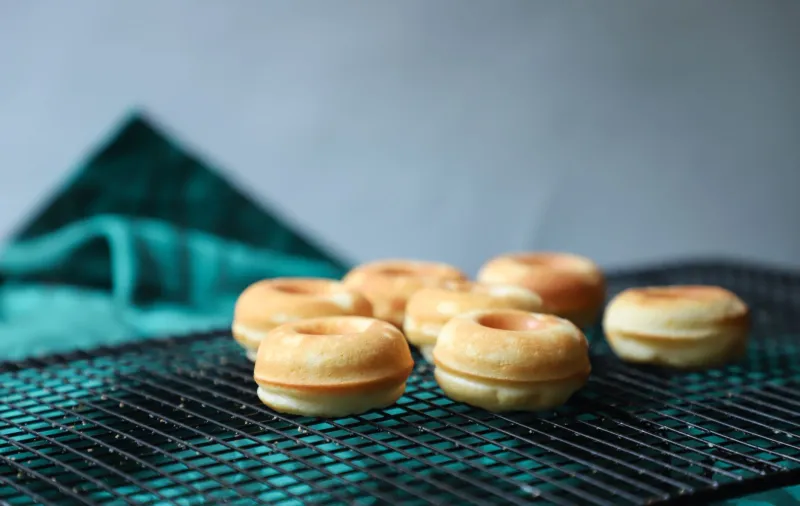
The correct move is a wire rack set over a sheet pan. The airflow underneath matters. The donut drains, steam escapes in all directions, and the crust firms up evenly on all sides. It takes up more counter space and requires washing an extra pan, and it is absolutely worth it every single time.
The Batch Size Problem Nobody Talks About
Frying too many donuts at once is the kind of mistake that feels efficient and tastes like regret. Crowding the pot drops your oil temperature dramatically and keeps it low, meaning your donuts spend more time in the oil trying to reach the right internal temperature. More time in oil equals more oil absorption. It's that simple.
Fry in small batches — two or three at a time for a standard home pot. Yes, it takes longer. Yes, you'll have to babysit the oil temperature between batches and let it climb back up before adding more. This is the job. There are no shortcuts here that don't end in grease.
So What's the Actual Fix?
To recap, because you deserve a clean list after all this:
- Get a reliable thermometer — but understand it's one piece of the puzzle, not the whole answer.
- Tighten up your dough hydration — soft and smooth, not tacky and wet.
- Chill your shaped donuts before frying — minimum 30 minutes, an hour is better.
- Fry in small batches and let the oil recover between rounds.
- Time your fry — about 60 to 90 seconds per side for standard thickness.
- Drain on a wire rack, not paper towels, and let them rest at least five minutes before glazing.
None of this is revolutionary. None of it requires special equipment or culinary school. It just requires paying attention to the things that actually matter instead of obsessing over a number on a thermometer while ignoring everything else going wrong around it.
Your donuts can be light, pillowy, and genuinely excellent. The oil isn't conspiring against you. You just have to stop letting your dough run wet and your timer run long.
Now go make something worth eating.